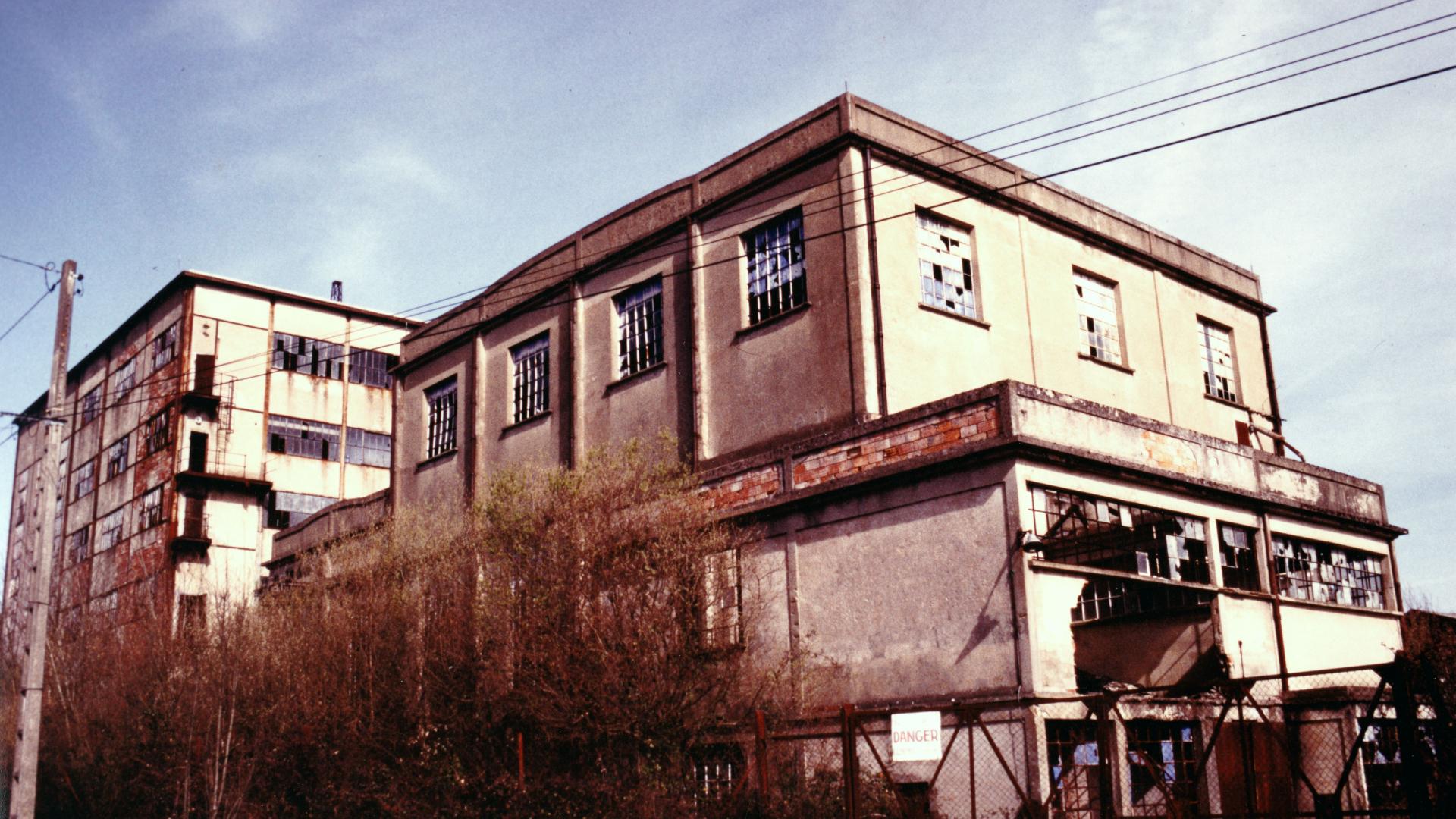
The project for a national distillery, attached to the army's gunpowder service and the Saint-Médard-en-Jalles gunpowder factory, took shape in 1938 with the construction of an enormous concrete cube with earthquake-resistant walls on land expropriated from the Saint-Jours factory. At its peak, the distillery employed over 300 people. Naturally, the factory was occupied and, upon the withdrawal of German troops, it was left in a very poor state. Very quickly, the focus shifted from distilling wood alcohol to finding a peaceful use for the immense cast-iron vats still in place. The task was entrusted to the biologist François Jacob, future Nobel laureate in medicine, with the mission of producing Penicillium in these vast cast-iron vats, which were far from possessing the necessary aseptic qualities. Despite a negative report on the feasibility of his mission—to obtain penicillin—the trials lasted six months.
From then on, the distillery became a cumbersome industrial wasteland. The decision to demolish it was made in 1960, but tackling the concrete was no small feat… and the work finally ended in the 1990s.
It's hard to imagine a post-war industrial wasteland when you're standing in front of this sports hall, which houses three basketball and handball courts, a gym dedicated to the CAM boxing club, and the clubhouse for the rugby (Rion-Morcenx Club) and football (Football Club Morcenx-Arengosse) clubs.
It also offers an outdoor pétanque court near the railway line and two courts within the distillery's covered area.
As for the tons of materials from the demolition, the scrap metal was sold, and the concrete rubble was buried beneath the athletics track and the skate park.